
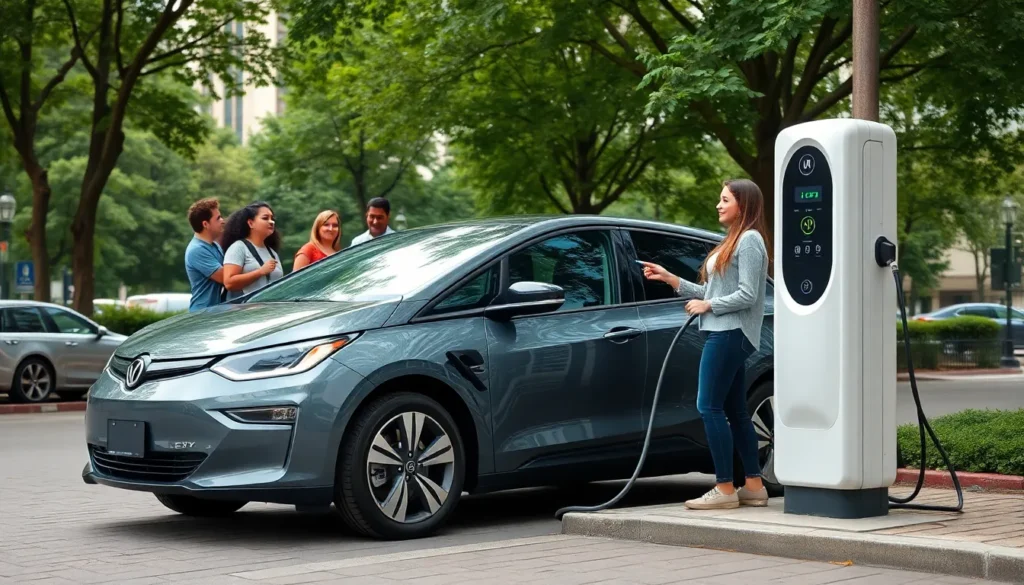
As electric vehicles zoom into the mainstream, a burning question sparks curiosity: Do these eco-friendly rides pay road tax? It’s a bit like asking if a cat pays rent for lounging around your house—confusing, amusing, and a tad bit controversial. With more folks trading in their gas guzzlers for silent, sleek machines, understanding the financial landscape of EVs is crucial.
Overview of Electric Vehicles
Electric vehicles (EVs) represent a significant shift in automotive technology. These vehicles utilize electric motors powered by batteries, reducing reliance on fossil fuels. A growing number of consumers are adopting EVs to combat climate change and lower emissions. Various models are available, ranging from compact cars to SUVs, attracting a diverse audience.
EVs operate differently compared to traditional gas-powered vehicles. Their energy source is electricity, which can come from renewable options like solar or wind. This shift not only impacts fuel consumption but also influences vehicle maintenance costs. For instance, EVs often require less maintenance due to fewer moving parts, leading to potential savings over time.
Governments promote the adoption of electric vehicles through incentives. Incentives often include tax credits, rebates, and benefits such as reduced registration fees. Such programs aim to increase EV usage by making them more financially accessible. As electric vehicle technology continues to evolve, advancements in battery technology and charging infrastructure become crucial.
Infrastructure plays a vital role in the growth of electric vehicle adoption. Charging stations are becoming more common, making it easier for drivers to recharge. Many states are investing in charging networks to support the increasing number of electric vehicles. With these developments, traveling long distances in an EV is becoming less challenging.
Understanding the implications of owning an EV includes exploring financial aspects. Potential owners frequently question road tax requirements. As the vehicle landscape changes, so does the way road taxes are assessed, affecting electric vehicle owners’ obligations.
Understanding Road Tax
Road tax refers to the fees charged for using roadways, which varies based on vehicle type and emissions. Electric vehicles prompt questions about whether these owners contribute to this revenue or benefit from additional exemptions.
Definition of Road Tax
Road tax, also known as vehicle excise duty in some regions, consists of taxes applied to vehicle ownership or usage. These fees often consider factors like engine size, fuel type, and emissions levels. Many jurisdictions implement these taxes to maintain and improve road infrastructure. Electric vehicles may qualify for different or reduced rates due to their lower environmental impact.
Importance of Road Tax Revenue
Revenue generated from road tax plays a crucial role in funding transportation systems. This funding supports the maintenance of highways, roads, and bridges essential for daily travel. It also contributes to developing public transport infrastructure, benefiting all road users. As electric vehicles rise in popularity, shifting revenue sources becomes necessary to ensure sustainable public spending on road upkeep. Effective management of road tax revenue helps balance environmental goals with infrastructure needs.
Do Electric Vehicles Pay Road Tax?
Electric vehicles (EVs) face distinct regulations regarding road tax in various jurisdictions. While some places exempt them from these fees, others impose fees to maintain infrastructure.
Current Regulations
Current regulations vary globally. In the United States, several states offer exemptions from road tax for EVs to encourage greener transportation. Federal incentives further support these eco-friendly choices. Some states, however, have introduced alternative fees based on mileage to offset reduced fuel tax revenues. Specific states, like California, levy a flat fee on EVs despite the lack of traditional gas tax contributions. These measures aim to balance road maintenance funding while promoting electric vehicle adoption.
Variations by State
Variations by state play a critical role in how road tax applies to electric vehicles. One example is Texas, where EVs enjoy a registration fee reduction. Florida also waives certain taxes for electric car owners. Contrarily, states like North Carolina impose annual fees specifically for EVs to recover lost fuel tax income. These differences highlight the importance of considering local regulations when evaluating the overall cost of owning an electric vehicle. Each state’s approach reflects its unique strategy toward infrastructure financing and environmental initiatives.
Benefits of Electric Vehicles on the Road
Electric vehicles provide numerous advantages that enhance their presence on the roads. These benefits include positive environmental impacts and significant economic considerations, shaping the future of transportation.
Environmental Impact
Electric vehicles significantly lower greenhouse gas emissions compared to traditional gas-powered vehicles. They produce zero tailpipe emissions, contributing to improved air quality in urban areas. Achieving energy efficiency, EVs convert over 60% of electrical energy from the grid to power at the wheels, which surpasses the efficiency of combustion engines. Using renewable energy sources like solar or wind for charging further reduces their carbon footprint. Lower noise pollution also contributes to quieter cities, improving the quality of life for residents.
Economic Considerations
Economic benefits accompany electric vehicle ownership. Owners enjoy reduced fuel costs, as electricity typically costs less than gasoline. Lower maintenance costs arise from fewer moving parts, which means fewer repairs and less frequent servicing. Tax credits and incentives offered by various governments further enhance the financial appeal of EVs, potentially saving thousands of dollars. Additionally, increased energy independence results from decreased reliance on fossil fuels, affecting global oil markets positively. Adopting EVs contributes to stabilizing energy costs while fostering job growth in the renewable energy and electric vehicle sectors.
Future of Road Tax for Electric Vehicles
As electric vehicles (EVs) gain traction, the future of road tax will likely evolve in response to changing transportation dynamics. Legislative changes can impact how EVs are taxed, addressing concerns about road maintenance funding.
Potential Changes in Legislation
Lawmakers are considering measures to ensure equitable contributions from all vehicle types. Several states propose bills to implement fees based on mileage, which can diversify revenue sources. This approach could help maintain infrastructure while still incentivizing EV adoption. Various regions are experimenting with different models to assess their effectiveness in balancing budget needs and environmental goals. Proposals may also consider the incorporation of low-emission zone fees to encourage cleaner air.
Solutions for Fair Taxation
Implementing a fair taxation system can ensure that all vehicles contribute to road maintenance. Technologies such as GPS tracking could facilitate mileage-based fees, so users pay according to actual roadway usage. Another potential solution involves establishing a tiered tax structure linked to emissions, where lower-emission vehicles face reduced fees. Many advocate for transparent communication on how tax revenues are utilized to improve infrastructure. Collaboration among state governments and communities can create solutions that benefit both EV owners and overall transportation needs.
As the electric vehicle market continues to expand it’s crucial for potential owners to stay informed about the evolving regulations surrounding road tax. With various jurisdictions adopting different approaches to taxation for EVs the landscape can be complex. Some states offer exemptions and incentives while others impose fees to maintain infrastructure.
Understanding these nuances is essential for anyone considering an electric vehicle. As governments seek to balance environmental goals with the need for sustainable funding for road maintenance the future of road tax will likely continue to adapt. Staying updated on local regulations will help ensure that EV owners can navigate the financial implications of their choice effectively.


